How to choose a Kind Shock dropper post with external routing
External routing along the frame | Frames without internal cable routing | 27.2 / 30.9 / 31.6 mm diameter | 65–175 mm travel | Under-saddle or handlebar remote control | KS model ranges | KGP / KGSL lever | Authorised service | FAQ
A dropper post with external routing lets you change saddle height while riding, but its control cable or housing does not run inside the frame. The routing is placed externally along the frame, so this option mainly makes sense for bikes that do not have internal dropper post routing preparation.
External routing is not a compromise by default. For older MTB frames, simpler hardtails or bikes without internal cable routing, it can be the most practical choice. To compare all routing types together, you can return to the main Kind Shock dropper posts category.
What external dropper post routing means
External routing means that the control cable or housing does not pass through the inside of the frame, but runs along the outside. This means the frame does not need dedicated ports for internal routing. That is especially important for older frames, some hardtails or bikes where the frame was not originally designed around a dropper post.
The advantage of external routing is easier compatibility with frames without internal cable routing and often easier access to the cable or housing during maintenance. The downside is more visible cable routing and greater exposure to dirt, abrasion or possible snagging in terrain.
If your frame has preparation for internal routing, an internally routed dropper post is usually the cleaner option. If you do not want to deal with cable or housing routing at all, wireless dropper posts can be an alternative.
When to choose external routing
An externally routed dropper post makes the most sense when the frame does not have preparation for internal cable routing. Typical examples include older mountain bikes, simpler hardtails, frames without cable entry ports or bikes where you do not want to modify the frame.
External routing can also be practical from a maintenance point of view. The cable and housing are easier to access, so inspection or replacement is often simpler than on frames with internal routing. This can be useful on bikes ridden in mud, dust or rough conditions.
On the other hand, if you want the cleanest possible appearance and the frame supports internal cable routing, internal routing will usually look more elegant. Choose an external post mainly when the frame actually requires it or when you prefer simpler routing outside the frame.
Under-saddle control vs handlebar remote control
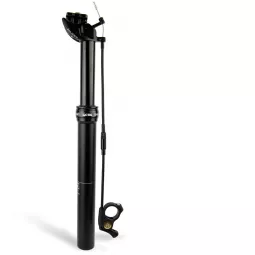
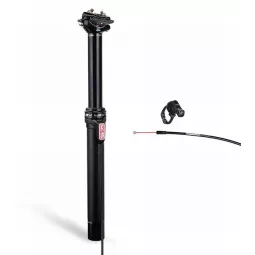
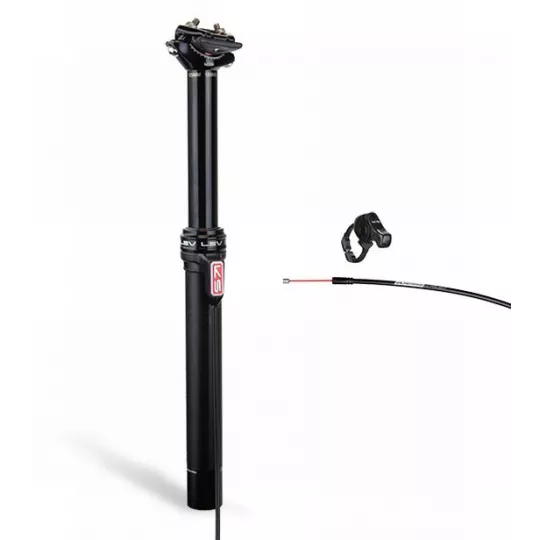
With externally routed dropper posts, it is important to distinguish whether the post is controlled directly under the saddle or with a remote lever from the handlebars. This is not only about comfort, but also about routing. An under-saddle version does not require a cable running all the way to the handlebars, while a handlebar remote uses a lever, cable and housing routed along the frame.
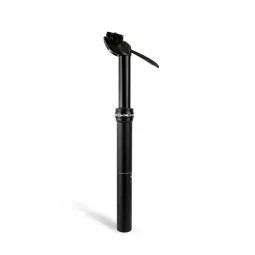
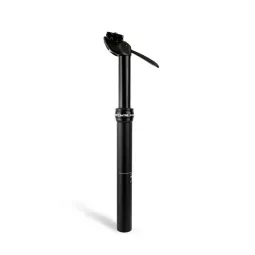
Under-saddle control is simpler and means less cable routing on the bike. It suits less technical use, simpler builds or riders who do not use the dropper very frequently. The downside is poorer usability while riding, because you need to reach down to the saddle to change height.
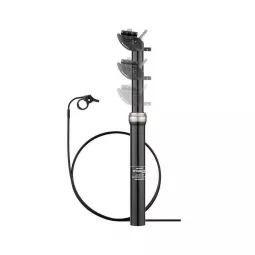
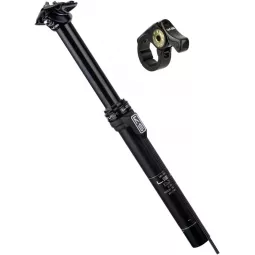
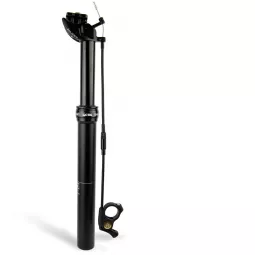
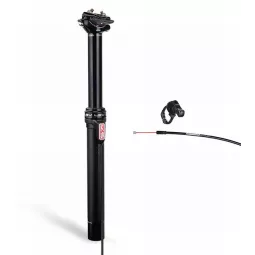
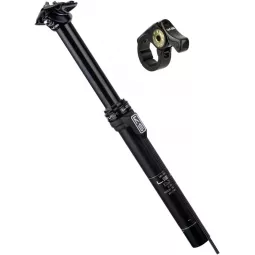
Handlebar remote control is more practical for MTB, trail riding and technical terrain. You can drop or raise the saddle without taking your hands off the handlebars, which is the main real-world advantage of a dropper post. You just need to account for external housing along the frame and correct lever placement on the cockpit.
Seatpost diameter: 27.2 / 30.9 / 31.6 mm
The seatpost diameter must exactly match the internal diameter of the frame’s seat tube. With external routing, the most common sizes are 27.2 mm, 30.9 mm and 31.6 mm. A wrong diameter will not fit mechanically, so always confirm the size from the original seatpost, the frame documentation or by measurement.
27.2 mm is often found on older frames, XC bikes, gravel bikes or slimmer hardtails. This is where external routing can be particularly relevant, because older or simpler frames often do not have internal dropper post routing preparation.
30.9 mm and 31.6 mm are common MTB sizes. With these diameters, externally routed posts are often used on hardtails, trail bikes or older mountain bikes where the rider wants the benefit of a dropper post, but the frame does not support internal housing routing.
Dropper post travel: 65 to 175 mm
Travel defines how many millimetres the saddle can drop. In this category, externally routed posts are available with 65, 75, 100, 120, 125, 150 and 175 mm travel. More travel gives more clearance over the bike, but it also usually means a longer post and higher demands on frame fit and saddle height.
65 or 75 mm travel makes sense where space is limited or where the rider only wants a basic saddle drop. Typical cases include smaller frames, XC, gravel, older bikes or specific builds where maximum drop is not the goal.
100 mm travel is a common choice for hardtails, older MTBs, smaller frames or shorter riders. It brings a noticeable improvement in bike control while still being easier to fit than much longer posts.
120 or 125 mm travel is a more universal option for regular MTB and hardtail use. It offers a good balance between better descending control and a manageable overall post length.
150 or 175 mm travel makes sense for more trail-oriented use, taller riders or larger frames. With these travel lengths, it is important to check overall post length, minimum insertion and correct saddle height. The highest travel is not automatically the best choice if the post does not fit the frame or leaves the saddle too high.
Overall length, insertion depth and external housing route
Diameter and travel are not enough when choosing a dropper post. Overall post length, minimum insertion and saddle height in the fully extended position also matter. If the post is too long, it may not fit into the frame or the saddle may remain too high even in the lowest possible installation position.
With external routing, also check where the housing will run along the frame. It should not form sharp bends, rub heavily on the frame, interfere with your legs, touch the tyre or conflict with rear suspension movement. Poorly routed housing can make the lever feel heavier, increase friction or eventually damage the frame where it contacts the paint.
In practice: first measure the frame diameter, then your correct saddle height and available insertion depth. Only then choose travel. With external routing, finally check the housing route so it is smooth, safe and does not get in the way while riding.
KS model ranges with external routing
With externally routed Kind Shock dropper posts, you will find several model ranges. As with any dropper post, compatibility comes first: diameter, travel, overall length, control type and housing route. The model range then helps define the level, intended use and control setup.
KS ETEN is a more accessible option with under-saddle control. It makes sense for simpler use, older frames, hardtails or a first dropper post if you do not want to run housing all the way to the handlebars.
KS ETEN Remote builds on the more accessible ETEN range, but adds handlebar remote control. This is more practical for MTB and trail use, because you can control the post while riding without reaching under the saddle.
KS DropZone is an externally routed range for MTB and trail use depending on the specific version. It can make sense where classic external routing, practical travel options and simple handlebar control are required.
KS LEV is a higher externally routed range with remote control. It suits riders who use the dropper frequently and want a more practical solution for trail, MTB or more sport-oriented riding.
KS LEV DX is another externally routed range with remote control. Depending on the specific version, it can make sense for MTB, gravel or more sport-oriented use. Again, the exact diameter, travel and overall post length are the key details to check.
Remote lever, housing and routing along the frame
With remote-controlled externally routed posts, also check the lever type. Some versions may come with a basic plastic lever, while others use the better aluminium KGSL lever. The basic plastic lever is functional and more affordable, but the aluminium KGSL gives a firmer feel, better ergonomics and more pleasant control during frequent use.
If you use the post only occasionally, the basic lever may be enough. If you ride trails, technical sections or operate the post frequently, a better lever makes a real difference. With a dropper post, it is not only the travel that matters, but also how quickly and naturally you can control it while riding.
For replacement, maintenance or fine-tuning of the control system, KS parts and accessories may also be useful, including levers, cables, housings or other accessories depending on the specific dropper post model.
Authorised Kind Shock service in the Czech Republic
A dropper post is a moving component that works in dust, moisture and under load. With external routing, the condition of the cable, housing and lever strongly affects the overall control feel. If the post returns slowly, sinks under rider weight, develops play or does not respond well to the lever, it is worth dealing with service.
One advantage of KS is that Katmar is the only authorised service centre for KS / Kind Shock dropper posts in the Czech Republic. This matters not only when choosing a new post, but also for long-term maintenance, diagnosis and correct spare parts.
What to check when choosing an externally routed dropper post
- Frame without internal routing: An external post is suitable mainly where the frame has no preparation for internal cable routing.
- Seatpost diameter: It must exactly match the frame. In this category, the main sizes are 27.2 mm, 30.9 mm and 31.6 mm.
- Travel: Choose according to riding style, rider height, saddle height and frame space. The highest travel is not automatically the best.
- Control type: Under-saddle control means less cable routing; handlebar remote control is much more practical while riding.
- Housing route along the frame: It must not kink, interfere with your legs, contact rear suspension movement or rub heavily on the frame.
- Remote lever: A basic plastic lever is functional, while the aluminium KGSL gives better control feel and more confidence during frequent use.
- Future service: With Kind Shock, authorised service and available spare parts are important for long-term function.
In practice: if the frame has no internal routing, start with an externally routed post. First confirm the frame diameter, then saddle height, available insertion depth and suitable travel. Then decide whether under-saddle control is enough, or whether you want the more practical handlebar remote with housing routed externally along the frame.
When should you choose a dropper post with external routing?
Choose external routing when the frame has no preparation for internal cable routing, when you do not want to modify the frame, or when you want easier access to the routing. It is suitable mainly for older MTBs, hardtails and frames without internal cable routing.
What is the difference between under-saddle control and handlebar remote control?
Under-saddle control does not require housing routed all the way to the handlebars, so it is simpler and has less visible cable routing. Handlebar remote control uses a lever, cable and housing along the frame, but lets you operate the saddle while riding without taking your hands off the bars, which is much more practical for MTB and trail use.
Should you choose the basic plastic lever or the aluminium KGSL lever?
The basic plastic lever is functional and more affordable. The aluminium KGSL lever offers a firmer feel, better ergonomics and more pleasant control during frequent use. If you use the dropper regularly in technical terrain, the better lever is noticeable.