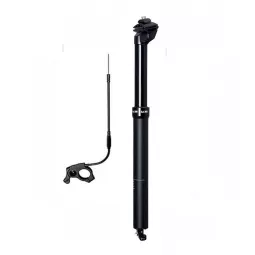
How to choose a Kind Shock dropper post with internal routing
Internal frame routing | 27.2 / 30.9 / 31.6 / 34.9 mm diameter | 65–200 mm travel | Overall length and insertion depth | KS model ranges | Remote lever and cable routing | Authorised service | FAQ
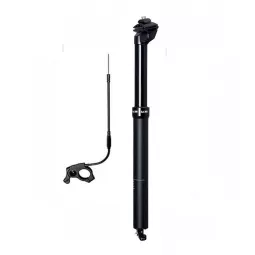
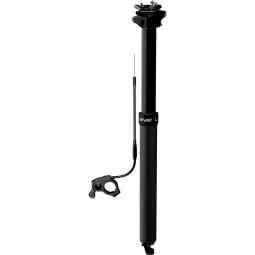
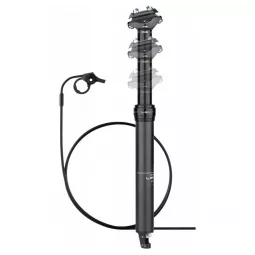
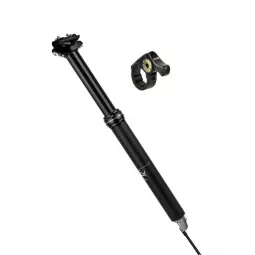
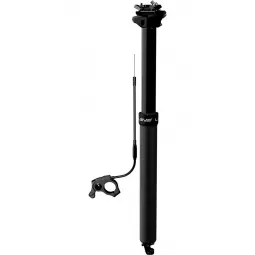
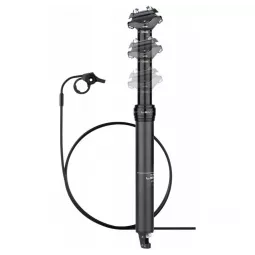
A dropper post with internal routing lets you change saddle height while riding and routes the control cable or housing inside the frame. This keeps the bike cleaner, protects the cable better and gives the whole setup a more modern look. On climbs, you can keep the saddle high for efficient pedalling; on descents, you can drop it lower and gain more space to move your body over the bike.
This subcategory is intended for frames prepared for internal dropper post routing. If your frame does not have that preparation, a dropper post with external routing will usually be a better option, or alternatively a wireless dropper post. To compare all routing types together, return to the main category of Kind Shock dropper posts.
What internal dropper post routing means
Internal routing means that the control cable or housing does not run externally along the frame, but passes through the frame structure. On modern trail, enduro and hardtail frames, this is now the most common solution. The result is a cleaner look, less risk of the housing catching in terrain and better protection of the routing from external damage.
Internal routing requires a frame designed for it. This usually means a cable entry point near the head tube or lower part of the frame and routing towards the seat tube. If the frame does not have an entry for internal routing, an internally routed dropper post cannot be mounted correctly without modifying the frame.
With Kind Shock, internal routing is often indicated by the Integra name. That alone is not enough, though. Before choosing a specific model, always check the seatpost diameter, travel, overall length, insertion depth and remote lever compatibility.
When to choose internal routing and when to choose another type
Internal routing makes the most sense on modern MTB frames, trail bikes, enduro bikes and hardtails with internal cable routing preparation. If the frame allows it, internal routing is usually the cleanest and most practical option. The cable housing is less visible, less exposed and the bike looks more compact.
On XC and gravel bikes, an internally routed dropper post can also make sense, but the choice is often more limited by seatpost diameter and available frame insertion depth. On gravel and XC, shorter travel such as 65 or 100 mm is often used because the goal is not maximum saddle drop, but quick extra control in technical sections.
If you have an older frame without cable entry ports for internal routing, an internally routed dropper post is not the right choice. In that case, external routing is the more logical option, with the cable housing running along the outside of the frame. If you do not want to deal with cable or housing routing at all, a wireless option can make sense.
Seatpost diameter: 27.2 / 30.9 / 31.6 / 34.9 mm
Seatpost diameter is the first fixed compatibility parameter. It must match the internal diameter of the frame’s seat tube. If the frame requires 30.9 mm, a 31.6 mm post will not physically fit. If the frame uses 27.2 mm, you need a post in that size. With dropper posts, the diameter should never be guessed.
27.2 mm is often found on XC bikes, gravel bikes, older frames or slimmer hardtails. Because of the smaller diameter, available travel and model options are usually more limited. With this size, riders often need to pay extra attention to shorter travel, insertion depth and whether the post will actually fit into the frame.
30.9 mm and 31.6 mm are common sizes on modern MTB frames. These diameters usually offer the widest choice of travel lengths and model ranges. This is where riders most often choose between 100, 125, 150 mm or longer travel depending on the frame, rider height and riding style.
34.9 mm is used on some modern, more robust frames, often in the trail or enduro segment. The larger diameter can be part of a frame design with a wider seat tube. The same rule applies here: first confirm the exact frame diameter, then choose travel, model range and overall post length.
Dropper post travel: 65 to 200 mm
Travel tells you how many millimetres the saddle can drop. More travel gives more clearance over the bike on descents, but it also usually means a longer overall post. That is why the highest available travel is not automatically the best choice. The post must match the frame, rider height, leg length and correct saddle height.
65 mm travel is suitable where frame space is limited or where the rider does not want to significantly change the character of the bike. It can make sense on XC, gravel, smaller frames or for riders who want only a basic saddle drop for technical sections.
100 mm travel is a common choice for XC, gravel, hardtails, smaller frames and shorter riders. It already offers a noticeable improvement in bike control, while still being easier to fit where there is not enough space for a longer post.
120 or 125 mm travel is a good compromise for hardtails, trail bikes and medium-sized frames. It suits riders who want a more noticeable difference on descents while keeping overall post length and insertion depth manageable.
150 mm travel is a very common trail and enduro choice. It makes sense for riders who want a significant saddle drop in technical terrain and have the frame and saddle height to fit the post correctly.
175 or 200 mm travel is mainly for taller riders, larger frames and more aggressive trail or enduro use. It is not a universal choice for everyone. With long-travel posts, it is essential to check overall length, minimum insertion, actual saddle height and any internal frame obstructions.
Overall length, insertion depth and rider height
When choosing an internally routed dropper post, diameter and travel are not enough. Overall post length, frame insertion depth, minimum insertion and saddle height in the fully extended position are just as important. If the post is too long, it may not insert deeply enough and the saddle may remain too high even in the lowest possible installation position.
Rider height helps determine correct saddle height, but it is not enough on its own. Two riders of the same height can have different leg lengths, different frame sizes and different saddle positions. That is why it is better to measure the real distance from the frame to the saddle rails at the correct riding position instead of choosing travel only from a general size table.
On smaller frames, shorter riders or full-suspension frames, there may be an internal obstruction inside the seat tube. This can be a suspension pivot, tube bend, bottle cage inserts or another frame limitation. From the outside, the frame may look long enough, but the post may not insert as deeply as needed.
In practice: first measure the frame diameter, then your correct saddle height, then the available insertion depth inside the frame, and only after that choose travel. With long travel options such as 175 or 200 mm, this check is critical. A shorter travel post can be the better real-world choice if it fits more precisely and does not compromise your saddle position.
KS model ranges with internal routing
Within internally routed Kind Shock dropper posts, you will find several model ranges. It does not make sense to choose only by model name – diameter, travel, length and routing must fit first. The model range then helps define the level, intended use and price point.
KS ETENi Integra is a more accessible entry into internally routed KS dropper posts. It makes sense for basic MTB builds, hardtails or a first dropper post where the main requirement is functional internal routing at a reasonable price.
KS e20i / Rage-I Integra is a practical range for regular trail, hardtail and MTB use. It suits riders who want an internally routed KS dropper post for regular riding, without necessarily needing the highest or lightest version.
KS LEV Si Integra is another internally routed range that makes sense for riders looking for a clean and functional solution within the KS line-up. Always choose by the exact diameter, travel and overall length.
KS LEV Integra is one of the main internally routed Kind Shock ranges. Depending on the specific version, it fits a wide range of MTB, trail and enduro uses. With this range, diameter, travel, length and overall specification are usually the key decision points.
LEV Carbon & CI Carbon Integra is aimed at lighter and more performance-focused builds, where weight, level of construction and sport-oriented character matter more. It makes the most sense once you are already clear on diameter, travel and frame compatibility.
Remote lever, housing and internal installation
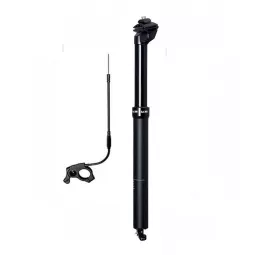
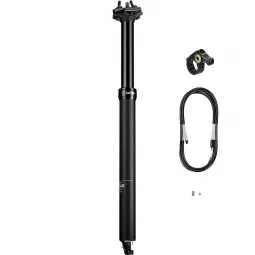
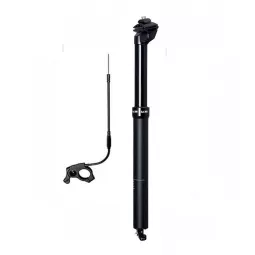
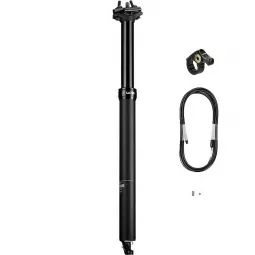
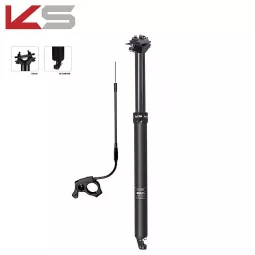
With internal routing, you should consider not only the post itself, but also the remote lever, cable and housing. Check whether the lever is included and whether it will work well with your cockpit, brakes and shifter. On bikes with a 1x drivetrain, the lever is often placed under the handlebar where the left shifter would normally be; other setups may require a different type of remote.
During installation, it is important that the housing inside the frame does not have sharp bends or tight kinks. Poor cable routing can make the lever feel heavier, slow down post response or make the action less smooth. Internal routing looks clean, but installation can be more demanding than with external routing.
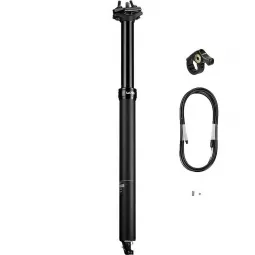
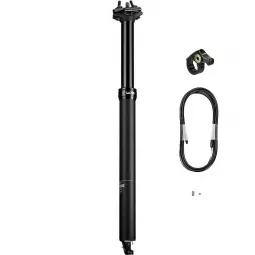
For maintenance, control setup or replacement of small parts, KS parts and accessories may be useful, including levers, cables, housings and other accessories depending on the specific dropper post model.
Authorised Kind Shock service in the Czech Republic
A dropper post is a moving component working in dust, moisture and under load. Over time, it may develop slower return, play, sinking under rider weight, rough action or remote-control issues. With internal routing, the condition of the cable and housing can also strongly affect how the post feels.
One major advantage of KS is that Katmar is the only authorised service centre for KS / Kind Shock dropper posts in the Czech Republic. This matters not only when buying a new post, but also for long-term service, diagnosis and the correct spare parts.
What to check when choosing an internally routed dropper post
- Frame preparation: Internal routing requires a frame with cable ports for routing the housing inside the frame. Without this preparation, external or wireless routing will be more suitable.
- Seatpost diameter: It must exactly match the frame. The most common sizes are 27.2 mm, 30.9 mm, 31.6 mm and 34.9 mm.
- Travel: Choose according to riding style, rider height, leg length and available frame insertion. The highest travel is not automatically the best option.
- Overall length: The post must fit into the frame and still allow the correct saddle height when fully extended.
- Minimum insertion: Every post must be inserted at least to the marked minimum insertion line. On small frames or with long-travel posts, this can decide compatibility.
- Cable routing: Sharp bends or poor housing routing can make the lever feel worse and slow down post response.
- Remote lever: Check whether the lever is included and whether it fits your cockpit, shifter and brakes.
- Future service: With Kind Shock, authorised service and available spare parts are a real advantage for long-term function.
In practice: first confirm that the frame supports internal routing. Then check seatpost diameter, measure correct saddle height, verify available insertion depth and only then choose travel and model range. With internally routed Kind Shock dropper posts, correct compatibility matters more than the model name itself.
How do I know I need a dropper post with internal routing?
You need a frame prepared for internal cable routing to the seatpost. If the frame has cable entry points and routing towards the seat tube, you can choose an internally routed dropper post. If it does not, external routing or a wireless dropper post will usually be the better option.
What diameter and travel should I choose for an internally routed dropper post?
Choose the diameter according to the frame: most commonly 27.2 mm, 30.9 mm, 31.6 mm or 34.9 mm. Choose travel according to riding style, rider height, saddle height and available frame insertion. Shorter 65–100 mm travel suits XC, gravel and smaller frames; 120–150 mm suits trail and hardtail use; 175–200 mm is mainly for taller riders, larger frames and enduro.
What is the difference between KS ETENi, e20i / Rage-I, LEV Si, LEV Integra and LEV Carbon?
KS ETENi is a more accessible entry into internally routed posts, e20i / Rage-I Integra suits regular trail and hardtail use, LEV Si Integra offers a clean internal KS solution, LEV Integra is an important range for wider MTB, trail and enduro use, and LEV Carbon & CI Carbon Integra makes sense for lighter and more performance-focused builds.