How to choose bike tools for home service and rides
Home service | Travel tools | Punctures and chains | Torque tightening | Integrated tools | FAQ
Choose cycling tools mainly according to where you plan to use them. Some tools make sense in a home workshop, some are worth carrying directly on the bike, and some are useful only for a specific service task. A rider who only needs to tighten the cockpit and replace an inner tube will need a different setup than someone working on chains, tubeless tyres, carbon components or precise torque tightening.
In this category, you will mainly find practical Granite Design bike tools, focused on compact mini tool kits, tyre levers, chain tools, torque solutions and integrated tools hidden directly inside the bike. You may also find selected Odyssey BMX tools, a brand connected mainly with BMX components and simple service equipment for specific use.
Basic tools for home bike service
For home bike service, you usually do not need a full professional workshop tool case straight away. It is more practical to start with what you actually use on your own bike: Allen keys, Torx keys, tyre levers, chain tools, a pump and, in some cases, a torque tool. This setup covers common bolt tightening, tyre or tube replacement, basic drivetrain work and pre-ride bike checks.
With home tools, quality and real usability matter more than the number of functions in the kit. A cheap universal tool set can look attractive, but if it includes tools you never use on your bike, it will not help as much as a smaller selection of the right tools. Modern bikes often require mainly Allen keys, Torx T25, tyre levers, a chain breaker, quick-link pliers and, for more sensitive components, accurate torque tightening.
If you service an MTB, gravel bike, road bike or BMX regularly, it makes sense to build your tool setup gradually according to real service tasks. Start with what you use most often: tyres, chain, brakes, cockpit, pedals and seatpost. Special tools for bottom brackets, cassettes or headsets make sense only when you actually plan to do those jobs at home.
Travel bike tools: smaller does not always mean better
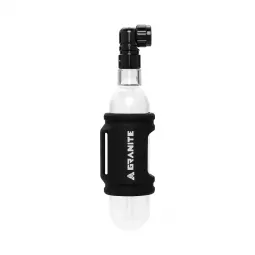
Tools for a ride have a different purpose than home workshop equipment. They need to be compact, lightweight and genuinely usable in real conditions. A useful riding kit usually includes a multi-tool or mini ratchet, tyre levers, a chain tool, quick link, CO₂ inflator or mini pump. For tubeless tyres, plug tools for quick puncture repairs also make sense.
When choosing travel tools, do not look only at the number of functions. It is important whether the tool actually reaches the bolts on your bike and whether you can use it on the trail, with gloves on or under time pressure. A mini ratchet with bits can be more practical than a large multi-tool if you often need better access to bolts on the stem, brakes or derailleur.
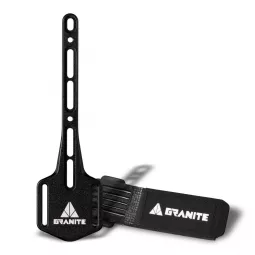
Compact Granite Design travel kits are interesting because they try to combine low weight, small size and real usability. They are not just emergency tools carried “just in case”, but equipment designed to solve common problems on the route: a loose bolt, puncture, chain issue or quick adjustment before continuing the ride.
Tools for punctures, tyres and chains
The most common issue on a bike is not a complex workshop repair, but a puncture, loose bolt or chain problem. That is why it makes sense to have tyre levers, tubeless repair tools, a chain breaker, quick link and, ideally, quick-link pliers. These are some of the most practical tools both for home service and longer rides.
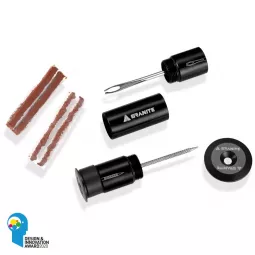
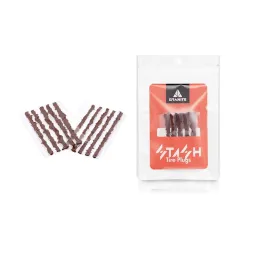
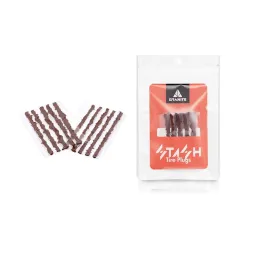
With tyre levers, focus on shape, stiffness and whether they are safe for the rim. A lever that is too soft can flex too much, while an aggressive edge can damage the rim or tubeless tape. With modern tubeless tyres, it is also useful to carry tubeless plugs for larger cuts, because sealant cannot always close a bigger hole by itself.
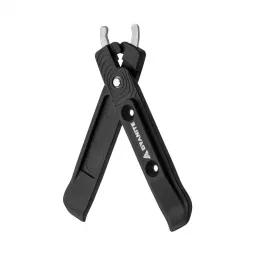
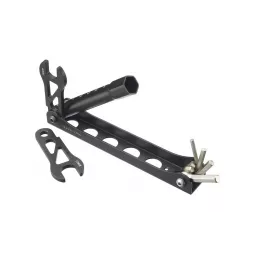
The chain is the second place where small tools are worth carrying. If a chain link breaks or gets damaged, a simple multi-tool may not be enough. That is why a chain breaker and quick link are useful. Some Granite Design tools combine several functions in one tool, such as tyre levers with quick-link plier function or compact tools with storage space for a chain quick link.
Torque tool: when accurate tightening matters
A bike torque tool makes sense mainly where over-tightening could damage a component. Typical examples include carbon handlebars, carbon seatposts, stems, clamps, brake levers, saddle clamps and more delicate threaded connections. The goal is not to tighten the bolt “as hard as possible”, but to tighten it to the value recommended by the manufacturer.
Too little torque can mean that the component moves while riding. Too much torque can damage the thread, clamp or carbon part. That is why a torque tool is especially useful for better bikes, carbon components and riders who regularly adjust the cockpit, seatpost or brakes at home.
Compact torque kits are useful because accurate tightening does not have to be limited to a full workshop. Some mini tool systems, such as solutions from Granite Design, can combine bits, a ratchet and torque control in a smaller format. This is useful for riders who want to carry fewer items but still care about precise adjustment.
Integrated Granite Design tools: when you do not want another bag
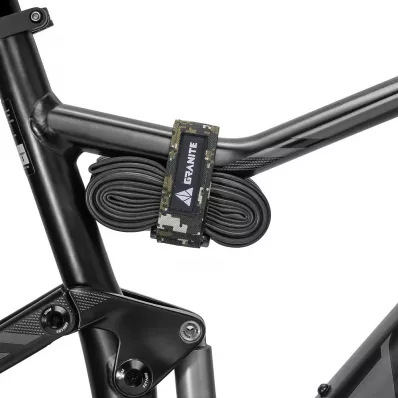
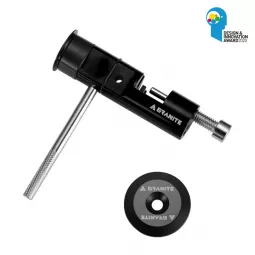
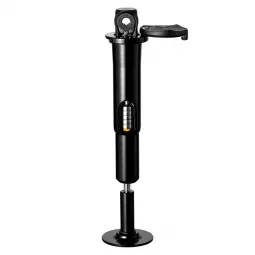
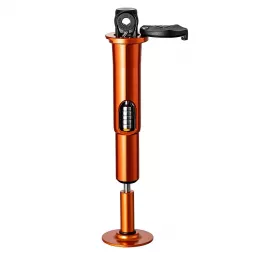
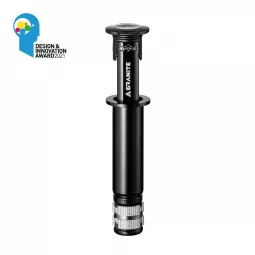
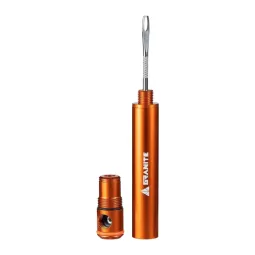
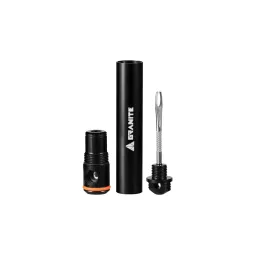
Granite Design is important in this category mainly because of its smart integrated tools. Some tools can be stored directly in the bike – for example inside the handlebars, steerer tube or other hollow spaces in the frame and components. The benefit is simple: you always have the tool with you, it does not take up space in a pocket or backpack, and there is less risk of leaving it at home before a ride.
Integrated tools make the most sense for MTB, trail, enduro, gravel and longer rides, where you want basic service equipment permanently on the bike. They are useful for quick tightening, chain repair, working with bits or as emergency equipment in case of a puncture. They do not replace a complete workshop, but they are a practical solution for riders who want to carry less and still have tools ready.
Before choosing an integrated tool, always check compatibility. Not every system fits every handlebar, steerer tube or frame space. Inner diameters, handlebar type, headset construction and available internal space all matter. With these systems, compatibility is just as important as the number of functions.
What to check when choosing bike tools
- Where you will use the tools: Home tools can be larger and more comfortable in the hand. Travel tools must be light, compact and versatile enough. Integrated tools are ideal when you want to keep basic service equipment permanently on the bike.
- What bolts your bike uses: Modern bikes often use a combination of Allen and Torx bolts, typically Torx T25 on brake rotors or selected components. Before buying a tool kit, check which sizes you actually need on your bike.
- Tyres and puncture repair: If you ride longer routes, tyre levers, an inner tube or tubeless plugs may be more useful than another bit set you will not use. A puncture is one of the most common problems you need to solve away from the workshop.
- Chain and quick link: On longer rides, it is worth carrying a quick link and a tool that lets you shorten or repair the chain. A quick link alone may not solve the issue if you do not have a chain tool or suitable pliers.
- Torque tightening: If you use carbon parts or more expensive components, a torque tool is not unnecessary luxury. It helps tighten bolts accurately and reduces the risk of damage.
- Access to bolts: Some multi-tools offer many functions, but in practice they can be difficult to use in tight spaces. A mini ratchet with bits can be a better choice if you often adjust brakes, cockpit or derailleur position.
- Integrated tool compatibility: For tools stored inside handlebars, the steerer tube or frame, check the dimensions and mounting system first. With these systems, the important question is not only the brand, but whether the tool physically fits your bike.
In practice: if you want a basic home service setup, start with good Allen keys, Torx keys, tyre levers and chain tools. If you are looking for tools to carry on a ride, focus on a multi-tool or mini ratchet, tyre levers, quick link, CO₂ inflator or pump and tubeless repair. If you use carbon or higher-end components, add a torque tool. And if you do not want to carry another bag, integrated Granite Design tools stored directly inside the bike make sense.
What bike tools are worth keeping at home?
For basic home bike service, it is worth having Allen keys, Torx keys, tyre levers, a chain breaker, quick-link pliers, a pump and, depending on the bike, also a torque tool. Special tools for cassettes, bottom brackets or headsets make sense only when you actually plan to do those service jobs at home.
What tools should you carry on a ride?
On a ride, it makes sense to carry a multi-tool or mini ratchet, tyre levers, inner tube or tubeless plugs, CO₂ inflator or pump, quick link and ideally also a chain tool. The goal is not to carry a whole workshop, but to fix a puncture, loose bolt or chain problem well enough to get home.
When does a bike torque tool make sense?
A torque tool makes sense mainly for carbon parts, stems, handlebars, seatposts, clamps and higher-end components where over-tightening can cause damage. If you regularly adjust your cockpit, seatpost or brakes at home, accurate torque is safer than guessing by hand.