

-
Top offers
-
Bikes
-
Accesories


Availability
Price
Selections
size
colour
MTB Hardtail Frames
MTB hardtail frames (fixed rear triangle) are the ideal choice for anyone looking for lightweight agility and easy maintenance. Whether you're planning an aggressive trail rig on a Dartmoor Primal frame or a fast XC machine, a solid foundation gives you the best feedback from the trail.
Sort by:
Active filters
- size: youth

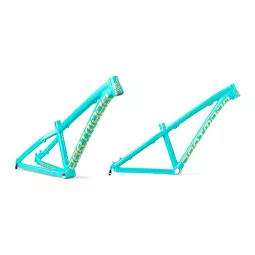
Hardtail MTB Frames: Why Choose One and How to Pick the Best Fit
Benefits of a Hardtail | Geometry and Forks | What to Watch Out For
When people talk about a hardtail MTB frame, many just imagine a basic bike for bike paths. But today's reality is different. Modern hardtails feature "progressive geometry"—they are longer and slacker, meaning they support you even on steep descents and technical sections where you previously would have needed a full-suspension bike. The main perk? No pivots or rear shocks to worry about; just hop on and ride.
Hardtail vs. Full-Suspension (Full)
A fixed rear end gives you a massive advantage on climbs—all your power goes directly into forward motion instead of being lost in the "bobbing" of a shock. Additionally, a hardtail is lighter, more affordable to buy, and easier on the wallet when it comes to long-term maintenance. It’s also a great way to learn technique; it teaches you how to work with your body weight instead of relying on suspension to smooth everything out. Unless you're strictly riding rough bike park trails, a hardtail often offers more fun and a "purer" riding feel.
Tech Specs: Making Sure Everything Fits
- Fork Travel: Frames are always built for a specific fork length. If you take a frame like the Dartmoor Primal (ideal for 130–150 mm) and put on a fork that's too short, the bike will feel "twitchy." If it's too long, you risk damaging the frame's headtube area.
- Boost Axles (148x12 mm): If you're building a new bike, look for a frame with a Boost axle. It makes the rear wheel much stiffer and leaves more room in the frame for wide, comfortable tires.
- Tire Clearance: This matters if you want to run wider rubber for better grip. Trail frames (NS Bikes, Dartmoor) easily accommodate 2.4" to 2.6" widths, while racing XC frames like Accent usually have a tighter limit around 2.25".
- Material: Aluminum is a safe bet for stiffness and weight. But if you want the frame to have some "give" and smooth out minor vibrations, go for a steel (CrMo) frame from brands like Identiti or DMR.
When building, don't forget that every frame needs its specific derailleur hanger and a matching headset. Getting these right will save you a lot of stress during assembly.
Workshop Experience: We often get asked if a hardtail will kill your back. The trick isn't just looking at S/M/L sizing, but at the Reach value. This determines how much you can move over the bike. The right Reach allows you to use your legs as suspension—making a hardtail ride pure joy.
Will a wider tire fit into a hardtail frame?
With modern trail frames like the Dartmoor Primal, you can count on space for tires up to 2.4" to 2.6" wide. On pure XC race frames, the clearance is smaller, usually around 2.25". Always leave a few millimeters of "mud clearance."
Why is a Boost axle important on a frame?
Boost (148x12 mm) isn't just another random size. A wider axle makes the entire rear wheel much stiffer, so it won't flex under power or in corners. If you're building a new bike, definitely aim for a frame with this standard; it’s the most common solution today.