

-
Top offers
-
Bikes
-
Accesories


Availability
Brand
Price
Selections
colour
Combo/Integral saddle
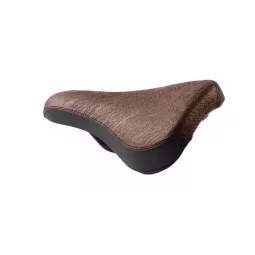
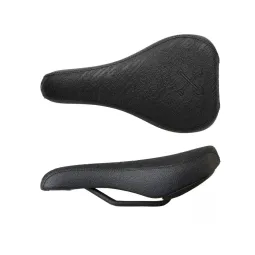
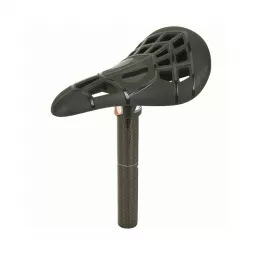
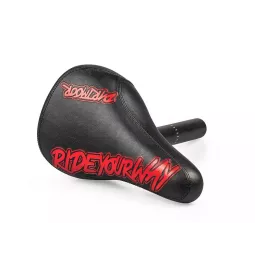
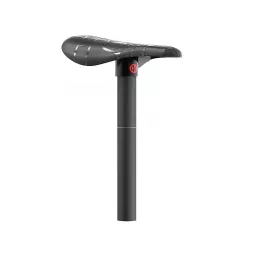
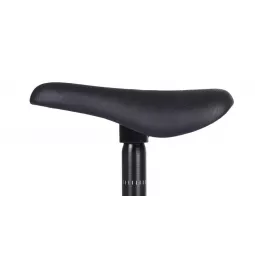
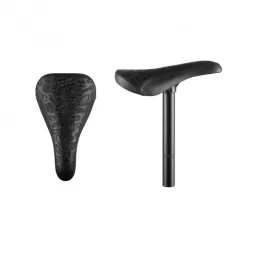
Combo/integral saddles combine the saddle and seatpost into one fixed unit. In this category you will find BMX Race, BMX, dirt and freestyle combo saddles in different seatpost diameters, weights and shapes – from lightweight race options to more durable models for regular riding.
Sort by:
Active filters
- Availability: In stock

How to choose a combo / integral saddle by diameter and use
What a combo saddle is | BMX Race use | Seatpost diameter | Slim, Fatty and race versions | Compatibility | FAQ
A combo saddle, often also called an integral saddle, is a saddle and seatpost built as one unit. It is not a classic saddle mounted separately on rails or with a pivotal system. With a combo saddle, you choose the complete unit at once – so the key points are mainly seatpost diameter, length, saddle shape and intended riding style.
This subcategory is one of the more specific types of bike saddles. It makes the most sense for BMX Race, BMX, dirt, pumptrack, freestyle and kids’ or junior builds, where low weight, simplicity, a clean look and a fixed saddle-seatpost connection are often more important than detailed saddle adjustment.
What is a combo / integral saddle?
With a combo or integral saddle, the seatpost is permanently part of the saddle. The advantage is simple construction, fewer separate parts and often lower weight. That is why this type of saddle is mainly used where there is no need to fine-tune the riding position as precisely as on a classic MTB or road bike.
Compared with a standard railed saddle, a combo saddle offers less adjustment. You do not adjust the saddle along rails and you cannot replace the seatpost separately. On the other hand, you get a simple, clean and lightweight unit that suits race-focused or simpler BMX setups well.
It is therefore not a universal replacement for every saddle type. If you need to adjust riding position, saddle tilt and exact saddle placement for longer pedalling, a classic saddle will usually be more suitable. But if you are building a BMX Race bike, dirt bike or simple kids’ setup, a saddle with integrated seatpost can make very good sense.
BMX Race, BMX and dirt: where combo saddles make the most sense
Combo/integral saddles make the most sense on BMX Race bikes. In BMX racing, the saddle is not used as the main contact point for long seated riding. It is more of a light, low and simple part of the bike build. Low weight, fixed construction, the correct seatpost diameter and enough clearance for bike handling matter more here.
For BMX freestyle, dirt or pumptrack riding, the logic is similar. The saddle is often used more for bike control, style and setup simplicity than long-distance comfort. If the bike is built for tricks, jumps, pumptrack sessions or short intense riding, a combo saddle can be more practical than a classic saddle and separate seatpost combination.
If you are building a classic MTB, trail or enduro bike for longer rides, a combo saddle will usually not be the first choice. In that case, a standard railed saddle is typically better because it offers more adjustment and a wider choice of shapes, widths and padding levels.
Seatpost diameter is the main parameter
With a combo saddle, the most important parameter is the seatpost diameter. Because the saddle and seatpost are one unit, you cannot simply solve a wrong diameter by replacing the seatpost separately. If the diameter does not match the frame, the saddle will not fit mechanically or will not hold correctly.
On BMX and kids’ setups, diameters such as 22.2 mm are common, while other frames may use 25.4 mm or 27.2 mm. Before buying, always check which seatpost diameter your frame requires. Choosing only by brand or appearance is not enough.
Also pay attention to the seat clamp. For the seat clamp, you check the outside diameter of the frame’s seat tube, while for a combo saddle you check the diameter of the seatpost that slides into the frame. These are two different measurements and should not be mixed up.
Slim, Fatty, Small, Large and carbon versions
With combo saddles, you will often see names such as Small, Large, Slim, Fatty, Race or Carbon. These are not just marketing labels. They usually indicate size, profile, padding volume, weight or the intended use of the saddle.
Slim or Small versions make sense for riders who want a low profile, clean look and minimum unnecessary weight. Fatty or Large saddles offer more surface area and support, but they are bulkier. In BMX Race, low weight and an efficient bike build are often the priority, while in dirt or freestyle use, durability and a more supportive feel may matter more.
A carbon combo saddle makes the most sense for more race-focused BMX Race builds where every gram matters. For regular riding, dirt or freestyle, however, the lightest option is not automatically the best one. Cover durability, shape and the correct diameter may be more important.
Brands in the combo/integral saddle category
This category includes mainly BOX Components, Dartmoor, DMR Bikes, Octane One and TIOGA. Each brand is aimed slightly differently, so it makes sense to choose according to the intended use, not only by brand name.
BOX Components and TIOGA make the most sense in a BMX Race and lightweight racing context. With these saddles, low weight, seatpost diameter and a simple race build are often key. Dartmoor and DMR Bikes fit more naturally into dirt, freestyle and funbike use, where durability, shape and practicality matter more.
Octane One represents a simpler combo solution for builds where you need a functional saddle with integrated seatpost without complicated adjustment. Across all brands, the same rule applies: check diameter and compatibility first, then consider shape, weight, brand and appearance.
Combo saddle vs pivotal saddle
On BMX and freestyle bikes, riders often choose between a combo system and a pivotal saddle. The difference is simple: a combo saddle has the seatpost integrated directly into the saddle, while a pivotal saddle mounts to a separate pivotal seatpost using a bolt from above.
The combo system is simpler and often lighter, but less adjustable. The pivotal system allows you to replace the saddle and seatpost separately and work more with saddle angle. If you want a maximally simple BMX Race or kids’ build, a combo saddle is a logical choice. If you want more adjustment and easier part replacement, the pivotal system can be more practical.
What to check when choosing a combo / integral saddle
- Seatpost diameter: The main parameter. The combo saddle must match the diameter required by the frame. Common sizes include 22.2 mm, 25.4 mm and 27.2 mm.
- Bike use: For BMX Race, look for a light and low-profile solution. For dirt, pumptrack and freestyle, a more durable and fuller saddle may make more sense.
- Seatpost length: Make sure the integrated seatpost length matches the frame and the desired saddle height. With a combo system, you do not choose the seatpost separately.
- Saddle shape and size: Slim or Small versions are low and lightweight. Fatty or Large versions offer more surface area and support, but they are bulkier.
- Adjustment options: A combo saddle is simple, but less adjustable. If you need to fine-tune position, tilt or saddle setback, consider a standard or pivotal system instead.
- Weight vs durability: Low weight can be a priority in BMX Race. For freestyle, dirt or kids’ bikes, however, a more durable construction may be more useful than the lightest possible option.
In practice: if you are building a BMX Race bike and want a simple, light and clean setup, a combo saddle is a very good choice. If you are building a dirt or freestyle bike, focus more on durability and saddle shape. If you are looking for a saddle for a classic MTB or longer rides, a standard railed system will usually be the better option.
What is a combo / integral saddle?
A combo or integral saddle is a saddle and seatpost built as one fixed unit. The advantages are simple construction, fewer parts, a clean look and often lower weight. The downside is less adjustment and the need to choose the correct seatpost diameter for the specific frame.
Does a combo saddle fit every bike?
No. With a combo saddle, the main thing that must match is the seatpost diameter, for example 22.2 mm, 25.4 mm or 27.2 mm depending on the frame. Because the seatpost is part of the saddle, a wrong diameter cannot be solved by simply replacing a separate seatpost.
Is a combo saddle suitable for MTB or longer rides?
Usually not as the first choice. Combo saddles make the most sense for BMX Race, BMX, dirt, pumptrack, freestyle, kids’ bikes and simple lightweight builds. For classic MTB, trail or longer rides, a standard railed saddle is usually more suitable because it offers better position adjustment and a wider choice of shapes.